What to Do When Your Child Has Big Feelings at Soccer
Home »
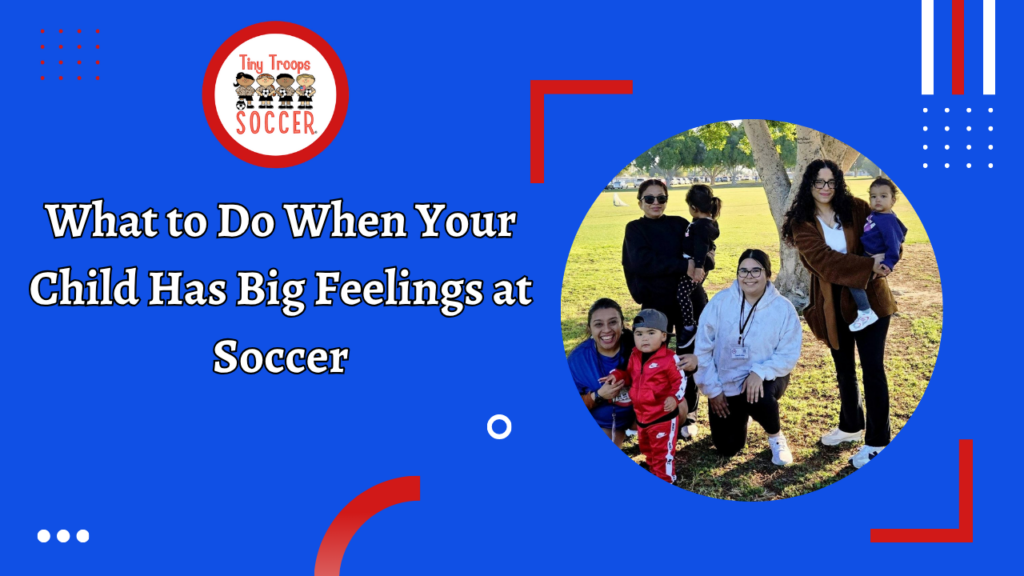
Ever had one of those Saturdays? Your little one has soccer and has been looking forward to it all week. But when you arrive… they don’t want to get out of the car. Maybe they cling to you when class starts, refusing to go onto Soccer Island. They might prefer to just watch instead of playing. You might see frustration or tears or refusal to do ANYTHING. You might have no idea why.
No matter what kind of day your Tiny Trooper is having, your little one is always welcome on Soccer Island. We like to call these Big Feelings Days. A Big Feelings Day doesn’t mean they aren’t still learning. Toddlers and preschoolers have all kinds of days, and we roll with the punches.
What Kind of Day?
When reflecting on Big Feelings Days, think about why your Tiny Trooper might have been feeling that way. They might have been tired or hungry. They might have been having a tough morning or thinking about something that happened before class. The reason usually has nothing to do with soccer itself.
It’s important to remember that young children are still learning how to handle big feelings, whether that’s part of new situations or changes in routine. Even children who are usually easygoing need extra support when they are having a hard time regulating their emotions.
Acknowledge the Big Feelings
Instead of asking questions about why your Tiny Trooper didn’t want to listen or participate, turn it into an opportunity to address their big feelings. Let them know you see them and their struggles. “That was a tough day today.” Or “You really liked watching that game.” Give them time and offer connection, letting them know that you’re nearby if they need to sit quietly or ask if they need a hug.
Find One Positive
Even though big feelings may have been the big event of the class, look for a little moment that might have been worth noticing. Perhaps your Tiny Trooper still dribbled the ball, or they listened to the coach during the obstacle course. Maybe the coach played one of their favorite games, and, for just that game, they participated. These positive moments count as a win, even if everything else was rough.
Give Them Space
If your Tiny Trooper doesn’t want to participate in class, don’t spend the entire class trying to convince them. Instead, encourage them without pressuring them. Let them know that it’s okay to watch the class and that they can join in when they are ready. Talk about what you are seeing on Soccer Island. “Coach is playing a fun game now. You can join if you want.” Taking away the pressure can help your Tiny Trooper feel comfortable enough to try.
Every Soccer Saturday is Different
Some Saturdays everything will run smoothly and your Tiny Trooper will have no issues participating in class. And then there will be the Saturdays when your Tiny Trooper spends more time refusing to play or sitting beside you than listening to the coach. Both types are a natural part of growing up. One bad Saturday doesn’t mean your Tiny Trooper doesn’t like soccer. They are still learning how to regulate their emotions. The good news is there’s always the next Saturday to step back onto Soccer Island and try again!
Ready to join us on Soccer Island? Find your nearest class and join us!
